
How to Understand Lectures in English: 7 Ways to Keep Up as an International Student
Published on Oct 8, 2026

Table of Contents
To understand lectures in English, stop trying to catch every word: prep the key terms before class, listen for the signposts that mark a new point, and replay the recording or read the transcript after class. This post is for international students and online learners who read English fine but get left behind when the professor starts talking. You’ll find 7 practical habits, how translation and note-taking tools can help, and what to know about asking permission to record.
Key Takeaways
- Trying to understand lectures in English is harder than reading a textbook: speech goes by once, professors talk fast, and every speaker sounds different.
- A 2024 study of 33 international students at a UK university found that 31 of them struggled with listening. The factors they named most often were native accents (42%) and speaking speed (36%).
- The three habits that help most: prep 10 key terms before class, listen for the words that signal a new point, and review the recording or transcript the same day.
- Only record a lecture if your university allows it, and only use the recording for your own study.
- Translation and summary tools can help you keep up and review, but they don’t replace going to class and asking your lecturer.
Why Is It So Hard to Understand Lectures in English?
When you read a textbook, you can pause, look up a word, and reread. In a lecture, the sentence goes by once. You have to listen, understand, and take notes all at the same time, while the professor has already moved on to the next idea.
You’re not the only one. Vasquez Diaz and Iqbal (2024) surveyed 33 international students from 9 countries at a university in the UK. Of them, 31 (about 94%) said they had difficulty with listening. Asked which factor affected them most, 42% picked native accents and 36% picked speaking speed. Half of the participants said native speakers talk fast on average.
To cope, many students used context to guess meaning, asked the speaker to repeat, or replayed the lecture recording, with or without subtitles (Education Sciences, 2024, English page). This was a small study at one university, so treat it as a hint rather than a figure that applies everywhere. Still, the problems it lists will sound familiar: unfamiliar accents, fast speech, and not being able to keep up with your notes.
Before Class: 2 Ways to Understand Lectures in English in 15 Minutes
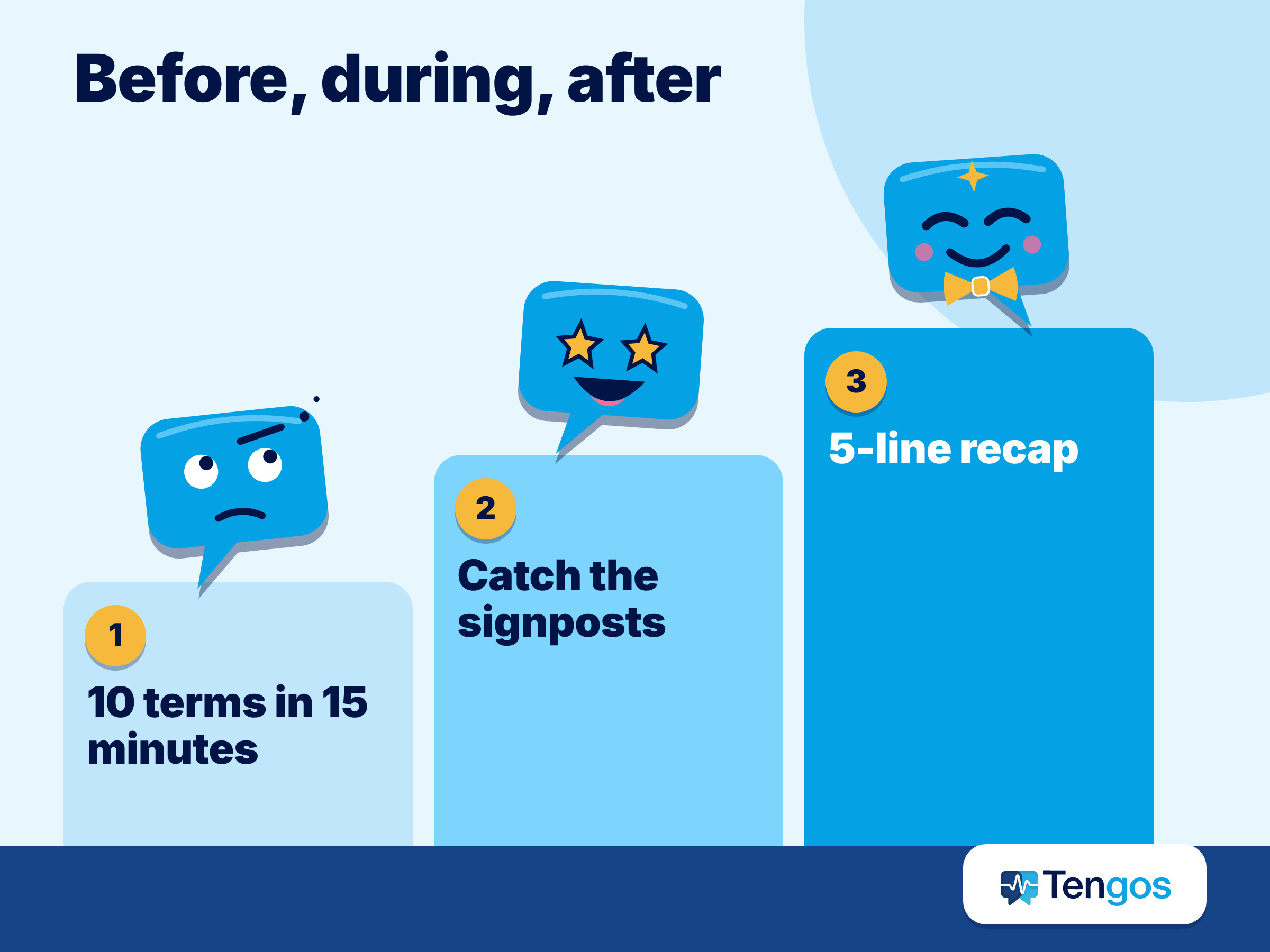
Prep is the cheapest way to understand lectures in English with less stress.
1. Skim the slides or syllabus and pick out 10 key terms. If your lecturer posts slides ahead of time, glance through them and mark about 10 subject-specific words. Look up the meaning and say each one out loud. The words you know on paper but have never heard spoken are the ones most likely to make you lose the thread.
2. Build a two-column glossary: English and your own language. Keep one list per course and add to it after every class. You can reuse it for exams and essays, and it also helps when you want a translation tool to use the right terms for your field (see the Tengos section below).
During Class: 3 Ways to Keep Up With Lectures in English
In class, your goal when you try to understand lectures in English is to catch the main ideas, not to write down every sentence.
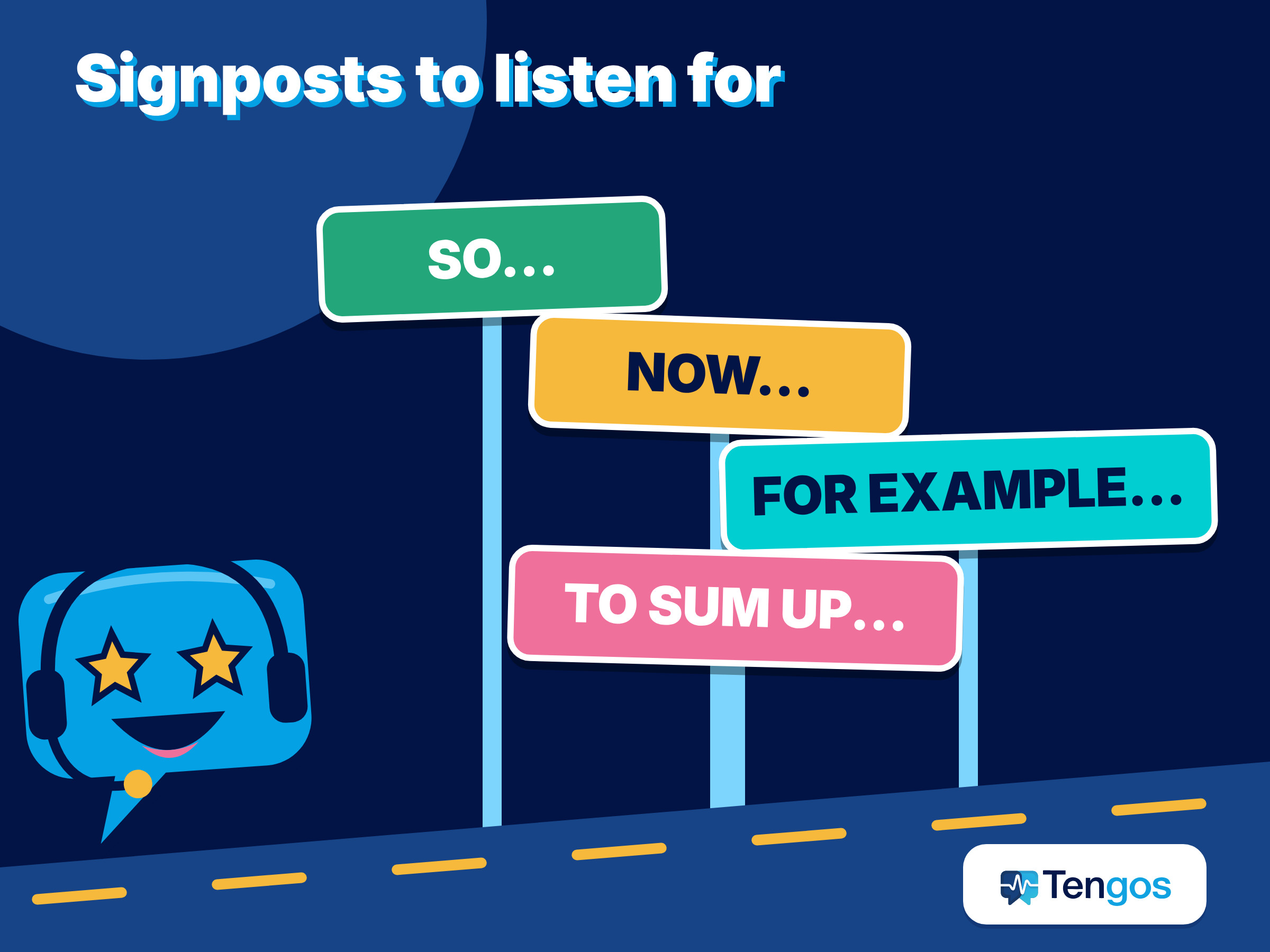
3. Listen for the signposts. Lecturers often use words like “so,” “now,” “OK,” and “right” to signal that a new point is coming. Flowerdew and Tauroza (1995) found that second-language listeners understood a lecture better when these markers were left in than when they were removed (Studies in Second Language Acquisition, English page). So when you hear “so, the main point is…”, stop the small stuff and write that idea down. Phrases like “for example,” “in contrast,” and “to sum up” work as anchors in the same way.
4. Write keywords, not full sentences, and leave blank lines. Note names, numbers, terms, and the main verbs. If you lose the thread, leave a blank line and keep listening. After class, you can fill the gap from the slides or the recording.
5. Ask early, or ask after class. “Could you repeat the last point?” is a perfectly normal thing to say. If asking in front of the whole room feels awkward, write down your question and ask at the end of class, by email, or during office hours.
After Class: 2 Ways to Avoid Falling Behind
6. Replay the recording or read the transcript the same day. Many people skip this step, and it is the most effective one. Many universities record lectures themselves. If yours doesn’t, check the recording policy before you do it yourself (see the next section).
7. Write a 5-line recap in your own words. Right after class, write five lines: the topic, three main points, and one question you still have. Send it to a classmate to compare. You’ll quickly see where you misunderstood something.
Can You Record a Lecture?
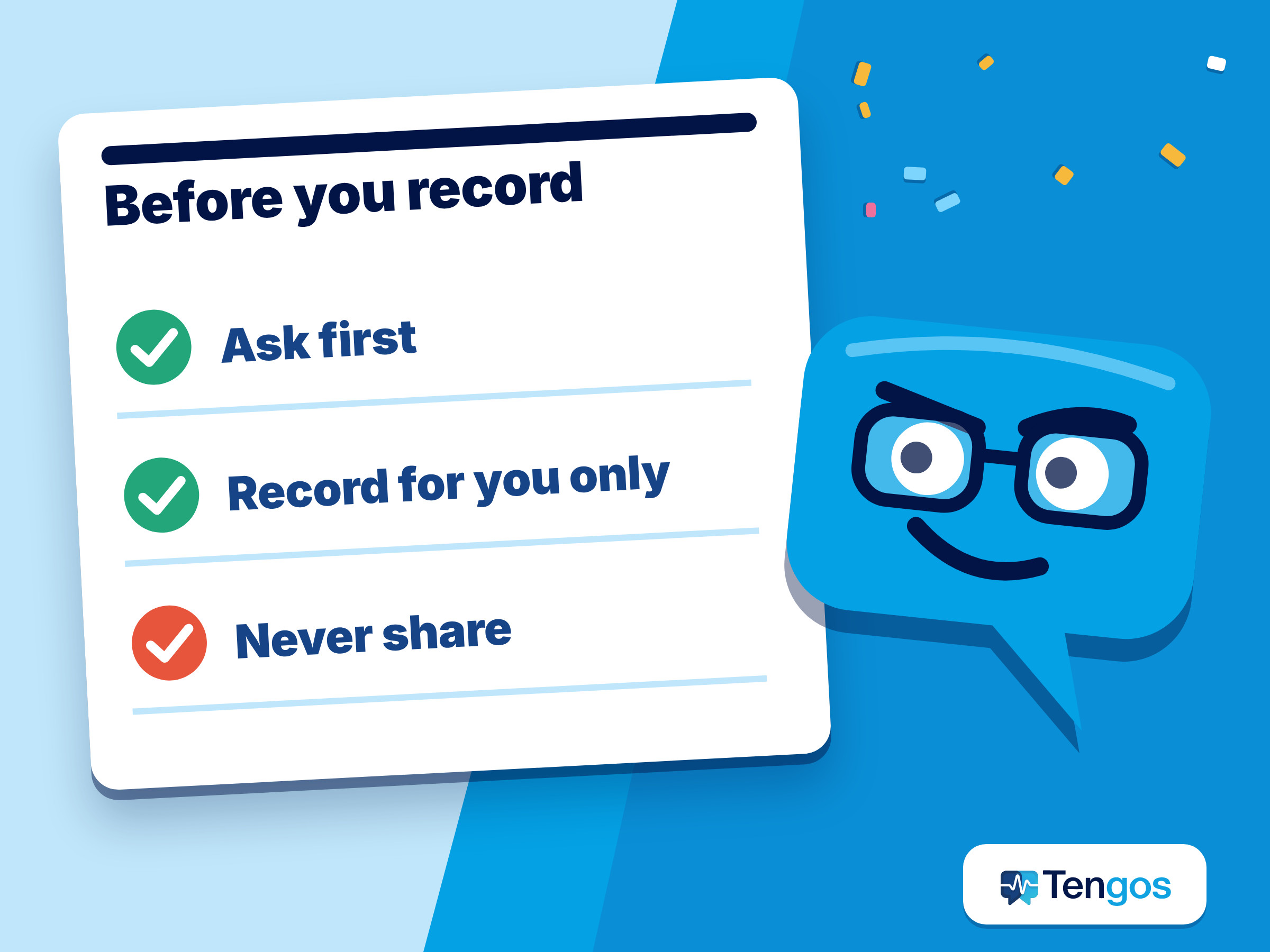
It depends on the university, so read your own school’s rules before you press record. Two examples show how different the rules can be. The University of Edinburgh says students may make their own audio recordings of lectures on their own devices under its inclusive learning policy, for personal study only and without sharing them (Edinburgh, English page).
The University of Dundee allows audio recording, but video recording needs the lecturer’s explicit consent, and recordings must not be passed on to others or posted on social media (Dundee, English page). A safe rule of thumb: ask your lecturer or student support office first, record for your own study only, and never post or share the recording.
Comparing Ways to Get Help When You Listen to Lectures in English
| Approach | Helps you understand in class | Recording to review later | Works best when |
|---|---|---|---|
| Prep and handwritten notes | Partly, depending on your listening level | Only your own notes | Familiar subject, slow speaker |
| Ask for slides and syllabus in advance | Yes, if the slides are detailed | Slides, but not what was said | Lecturer shares materials early |
| University lecture recordings | No (you watch after class) | Yes, usually with English captions | University has a recording system |
| Tool with translation, transcript and summary | Yes, with a translation into your language | Yes, with a summary of key concepts | Term-heavy subjects, long lectures |
No single approach is perfect for every course. When a subject is full of terminology and the lecturer talks fast, an extra layer of support is worth having. If you run into the same problem in meetings, the post on English meetings when English is your second language covers similar tactics.
How Can Tengos Help You Understand Lectures in English?
Tengos is an app with real-time translation across 60 languages and an AI Meeting Summary. If you want to understand lectures in English more easily, you can record live and read the translation in your own language as it happens, or use Import Audio to upload a recording after class. You get a transcript that labels each speaker and a summary of the key concepts, and you can export SRT or VTT subtitle files (see the lectures and training page). The Glossary feature lets you add your field’s own terms so translations stay consistent. The number of terms depends on your plan, so check the pricing page.
The Free plan gives you 120 minutes a month with no credit card needed, enough to try it on a few classes before you decide. Longer lectures usually call for a paid plan, and Tengos offers a 50% education discount (see the pricing page for conditions). You can get the app for iOS on the App Store or Android on Google Play.
One note: a tool supports your learning, but it doesn’t replace going to class. For exams or work with strict academic rules, follow your university’s policy and ask your lecturer when you’re unsure.
FAQ
What should I do if I can’t understand lectures in English in the moment?
To understand lectures in English as they happen, write keywords and leave a blank line, and don’t try to hold on to every word. Keep your attention on signposts like “so,” “now,” and “for example.” At the end of class, ask your lecturer or check your notes against the slides and the recording.
Should I ask to record lectures?
Yes, if your university allows it. Ask your lecturer or read the university’s policy before you record, use the recording only for your own study, and don’t share it with anyone.
How can I get used to my lecturer’s accent and understand lectures in English better?
Listen to public lectures from your own university or videos in the same field, and replay them with subtitles. 10 to 15 minutes every day works better than one long session a week.
Is real-time translation accurate enough for technical terms?
A tool helps you follow the main ideas, but you should still check technical terms against your textbook. Adding terms to the Glossary makes translations more consistent.
When should I ask a classmate or lecturer for help?
When you notice you keep missing things in courses that matter. A simple request like “Could I compare my notes with yours?” usually gets a quick yes.
Sources
- Vasquez Diaz, K. R., Iqbal, J. (2024). Challenges Faced by International Students in Understanding British Accents and Their Mitigation Strategies: A Mixed Methods Study. Education Sciences, 14(7), 784. Research paper (English page).
- Flowerdew, J., Tauroza, S. (1995). The Effect of Discourse Markers on Second Language Lecture Comprehension. Studies in Second Language Acquisition, 17(4), 435-458. Abstract (English page).
- University of Edinburgh, lecture recording policy (English page).
- University of Dundee, policy and guidelines on recording lectures (English page).
- Tengos product information: pricing page and lectures and training page.